Rediscovering the Ancient Amber Road
To walk. Simply to set aside the newspaper, rise from the sofa, pull on a coat, take leave of wife and children with a loving kiss but without a word, and step out of the house. To pause for a moment before plunging into the darkness, draw in the cold air, then down the empty street, turn left, and simply keep going. Straight ahead. To hear one’s own footsteps, to feel the rhythm of the walk, the solitude, the air, the night. To set out.
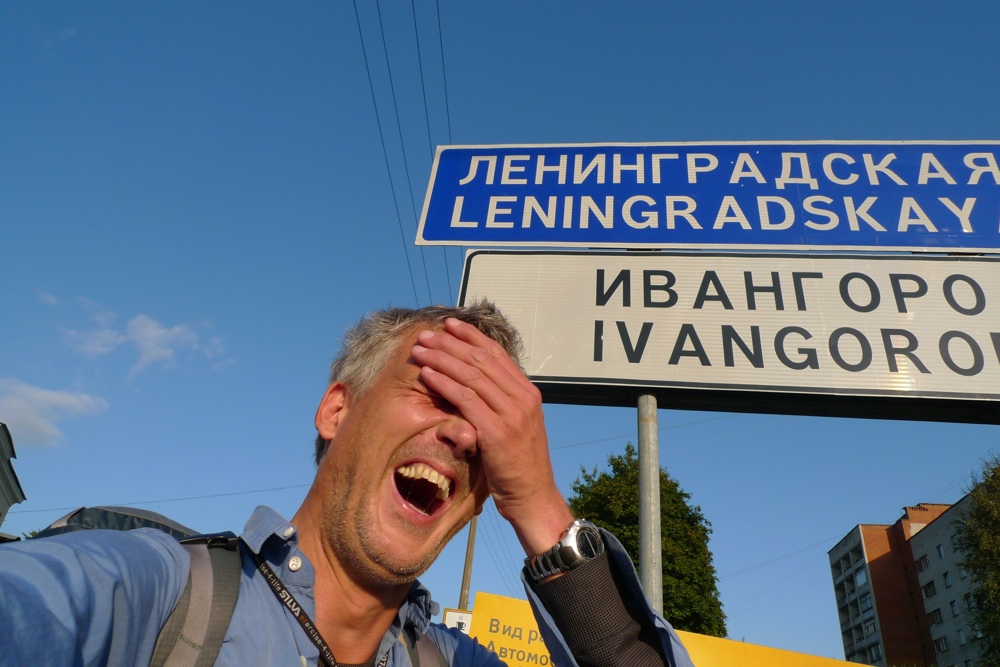
Not to flee from something, not to steal away, not to abandon anyone or take flight. No, no negative impulse: rather, to answer a primal human need. To walk. To be alone. To discover. To seek, not necessarily to find. To bear responsibility for oneself alone. To press on, alone, under one’s own power. But above all: to walk.
Markus Zohner walked for nine months from Venice to St Petersburg, covering 4,000 km on foot through twelve countries along the ancient Amber Road. He has written a book about the journey, published by FIZZO Photo Book Film in German („Die Wiederentdeckung der Bernsteinstrasse“) and in Italian (“La riscoperta dell’antica Via dell’Ambra”).
A large photographic exhibition of over 120 images has been assembled and shown in Austria, Italy, Hungary and lately in Bellinzona / Ticino, at Sasso Corbaro Castle.
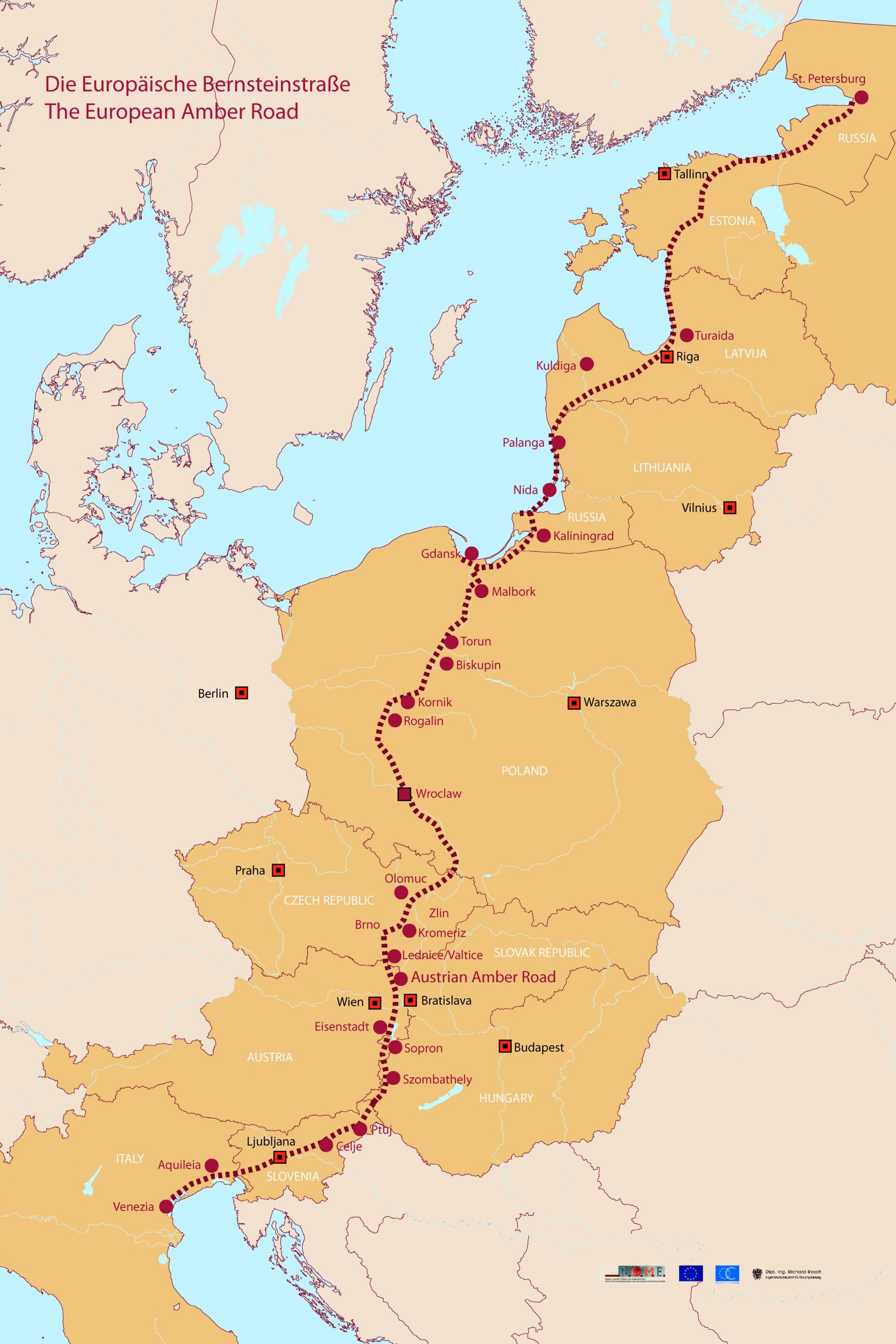
His walk along the Amber Road led him through Italy, Slovenia, Hungary, Austria, the Czech Republic, Slovakia, Poland, Kaliningrad, Lithuania, Latvia, Estonia and Russia.
A solo illustrated talk by Markus Zohner on his nine-month walk along the Amber Road from Venice to St Petersburg. Photographs, maps, stories from the road, and the questions the walk keeps asking long after it ended.
A duo version, with Luca Massaroli reading from the book, is available for theatre and festival bookings. Mention the format in your inquiry.
As often with such ventures, the idea for this journey was born from a dream: to set off on a long hike, completely on my own, in my own right, and accountable only to myself. People often ask me: “Why did you do this?” Or: “What was the real reason for your journey?” To be honest, I don’t know. Except for the fact that there was this dream, which became more and more clear and pressing, and which took on more concrete form, the more I thought about the different countries, the Amber Road and its history. One and a half years before I actually set off on my journey, I started taking these dreams more seriously and giving them a more clearly defined outline.
In my nocturnal dream expeditions through the maps of the world, I focused more and more on Europe and that part of the continent, which fascinated me most, so that one day I inevitably encountered the Amber Road. It runs right through those countries and regions, which interested me most.
Often, people I met said: “I would also love to do such a thing!” And when I asked them why they didn’t do it – hiking, after all, is something that most people can do – they found a wealth of excuses: family, work, their homes, their employers, age, etc. And more than once, when I heard these answers, I pondered whether, in fact, we work, buy houses, and pay insurance policies only so we don’t have to realize our dreams.
For the Baltic region, amber was considered a magical “metal” of fundamental importance on the road to prosperity, and a vital link between the emerging culture of Central Europe and the Bronze Age peoples of the Baltic and central European lands.
In the first century AD, the amber trade across Central Europe was controlled principally by local populations. The journey began at the mouth of the Vistula, on the Samland peninsula, whence one followed the watercourse upstream to the River Warta, then took the tributary Prosna to the upper Oder in Silesia, and thence along the Morava to the Danube. At the confluence of the Morava and the Danube stood Carnuntum (present-day Petronell, Austria), a trading centre of paramount importance in Central Europe and a crossroads of nearly all the continent’s commercial routes. From Carnuntum, amber was distributed and dispatched to Pannonia (present-day Hungary), to northern Yugoslavia, and, in Italy, to Aquileia, where highly important manufacturing centres were located.
The “island of amber”, called Glaesaria by the Romans, Abalus by Pytheas of Massalia, Basilia by Timaeus, Balcia by Xenophon of Lampsacus, and Austeravia by the barbarian peoples, is the present-day Samland peninsula, from which nearly ninety per cent of commercially traded amber is still extracted today.
Markus Zohner has documented his journey on medium-format film photographs (120, 6×7). 120 of these photographs, with detailed captions in three languages: Italian, German and English, constitute a large photographic exhibition that takes the viewer on the long walk from Italy all the way to Russia.
The exhibition has been presented in Austria, Italy, Hungary and in Switzerland (Sasso Corbaro Castle, Bellinzona, March–June 2013). It is a travelling exhibition that can be set up in sufficiently large and well-lit spaces.
Comments, annotations, explanations and maps of the Amber Road and the countries traversed complete the exhibition, along with a film in which Markus Zohner narrates his journey with original photographs and sounds.
The illustrated lecture is the spoken shape of a book. The book is the quiet shape of the lecture. Both come from the same nine months on foot.
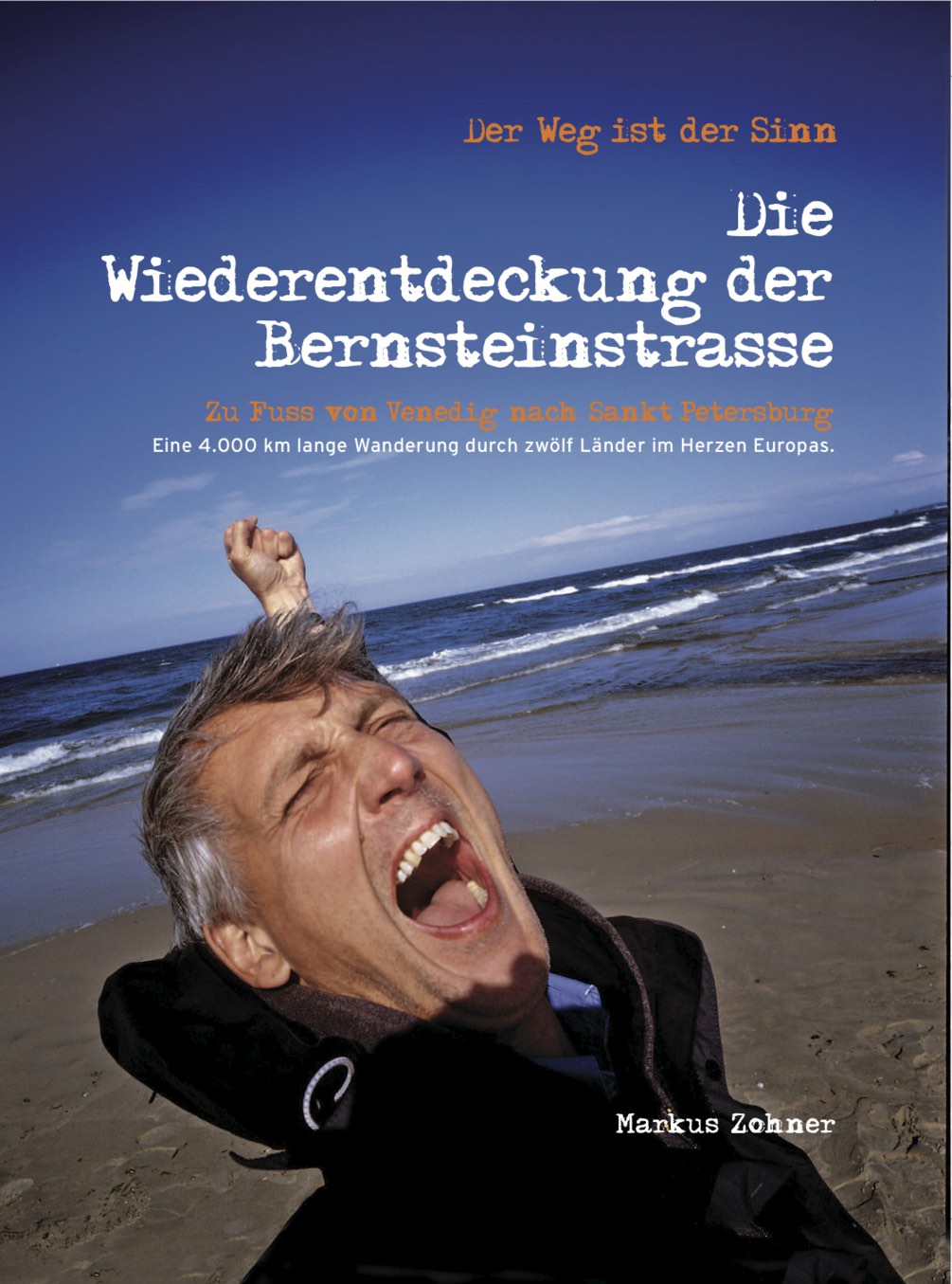
· Italian edition — La riscoperta dell'antica Via dell'ambra · CHF 32
· German edition — Die Wiederentdeckung der Bernsteinstrasse · CHF 32
To host The Ancient Amber Road at your theatre, festival or cultural venue, contact the production.